“How can one fill the time with notes worthy of the preceding silence?” – Arvo Pärt
This All Saints’ Sunday we honour the 90th birthday of the Estonian composer Arvo Pärt, born on September 11, 1935, with a performance of his Beatitudes. A leading figure of the Soviet avant-garde in the 1960s, Pärt came to reject modernity and literally ceased composing for a number of years. He only found a way forward after making a study of
pre-Baroque music (plainchant and early polyphony) and converting to the Orthodox Church in the early 1970s. These two influences led to the birth of his mature tintinnabuli style in 1976. The setting of sacred texts created further problems with the authorities, and in 1980 Pärt emigrated to the West, settling in Berlin. His works, both vocal and instrumental, reflect his deep faith yet paradoxically Pärt is one of the most celebrated and performed of living composers. As noted by Steve Reich, “He’s completely out of step with the zeitgeist and yet he’s enormously popular, which is so inspiring. His music fulfills a deep human need that has nothing to do with fashion.”
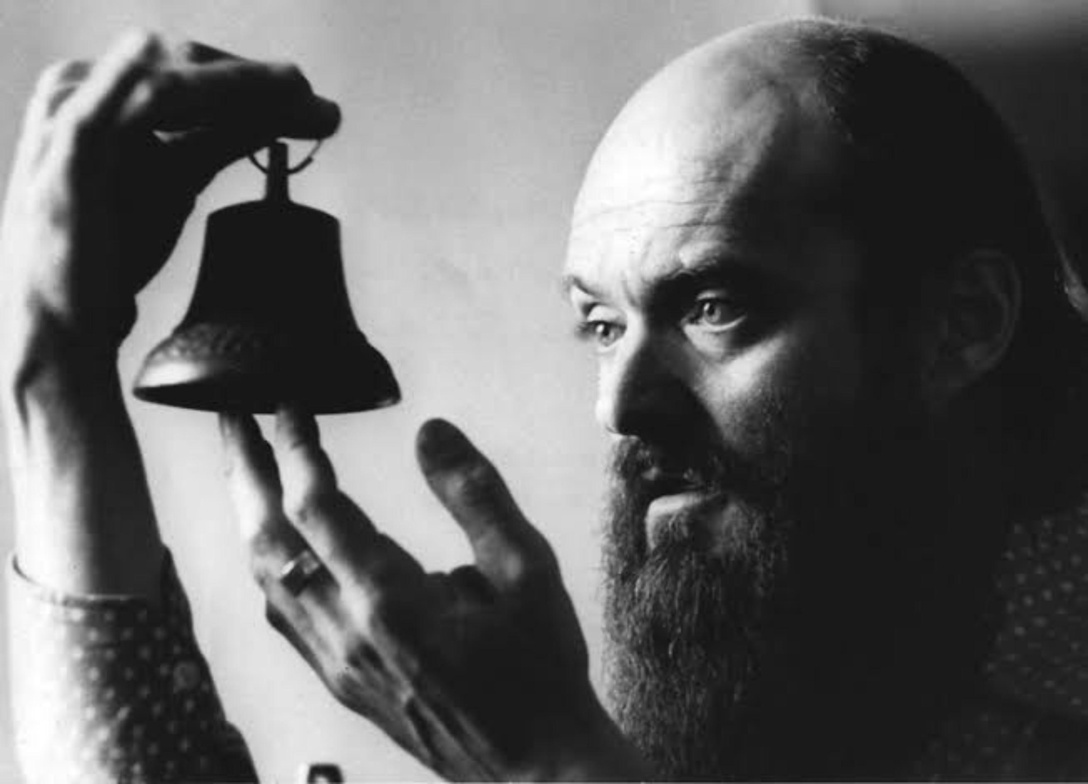
Pärt’s music is built around two basic elements, the scale and the triad. The functional harmony of Western common-practice music is lacking. Instead, the sound of an unchanging triad, either actual or implied, resonates throughout like a bell tone – hence the name tintinnabuli. This lends the music an overall quality of stasis and timelessness. The comparison with an icon is not without merit: austere, non-realistic, lacking in individual expression, and bringing the eternal into the temporal.
That said, Pärt’s setting of The Beatitudes includes far more harmonic variation than most of his works. Normally Pärt’s melodic process for a vocal piece involves moving up or down the scale according to the number of syllables in a word, but in English there are too many one-syllable words, leading to reiteration of the same pitch. To compensate each half verse employs a different triad, minor then major, the reciting tone gradually ascending as tension builds toward the central Amen, similar to the winding of a clock mechanism. At this point the accumulated energy is released as the harmonies retrace the same journey in reverse during the toccata-like organ cadenza. The Beatitudes was written in 1990 to a commission from the RIAS (Radio in the American Sector) radio station in Berlin and is dedicated to the station’s long-time music editor, Hildegard Curth.